
Photographing a Community Vet Project in the Colombian Amazon
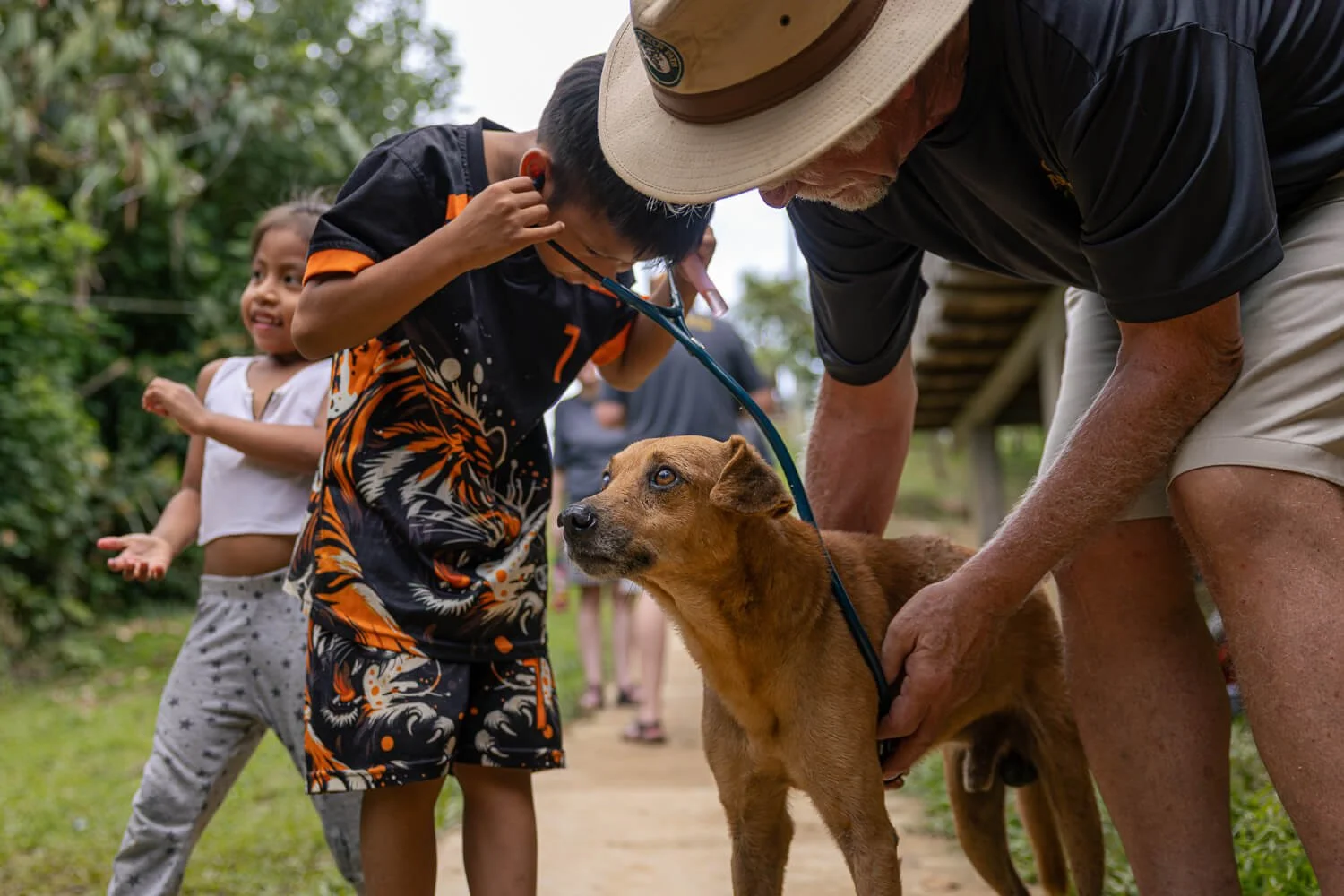
In February 2026 I traveled to the Amazon with Gray Muzzle Society, a Colorado-based animal rescue, for their project, Operation Amazonas. The mission is to support veterinary care in indigenous communities along the Amazon River, where families live far from the nearest vet clinic. Our small team, including a veterinarian and veterinary technicians, brought supplies, treated dogs and cats for parasites and wounds, and talked with families about animal health. I came along to document it all and to lend a helping hand wherever I was needed.
The river is the only road
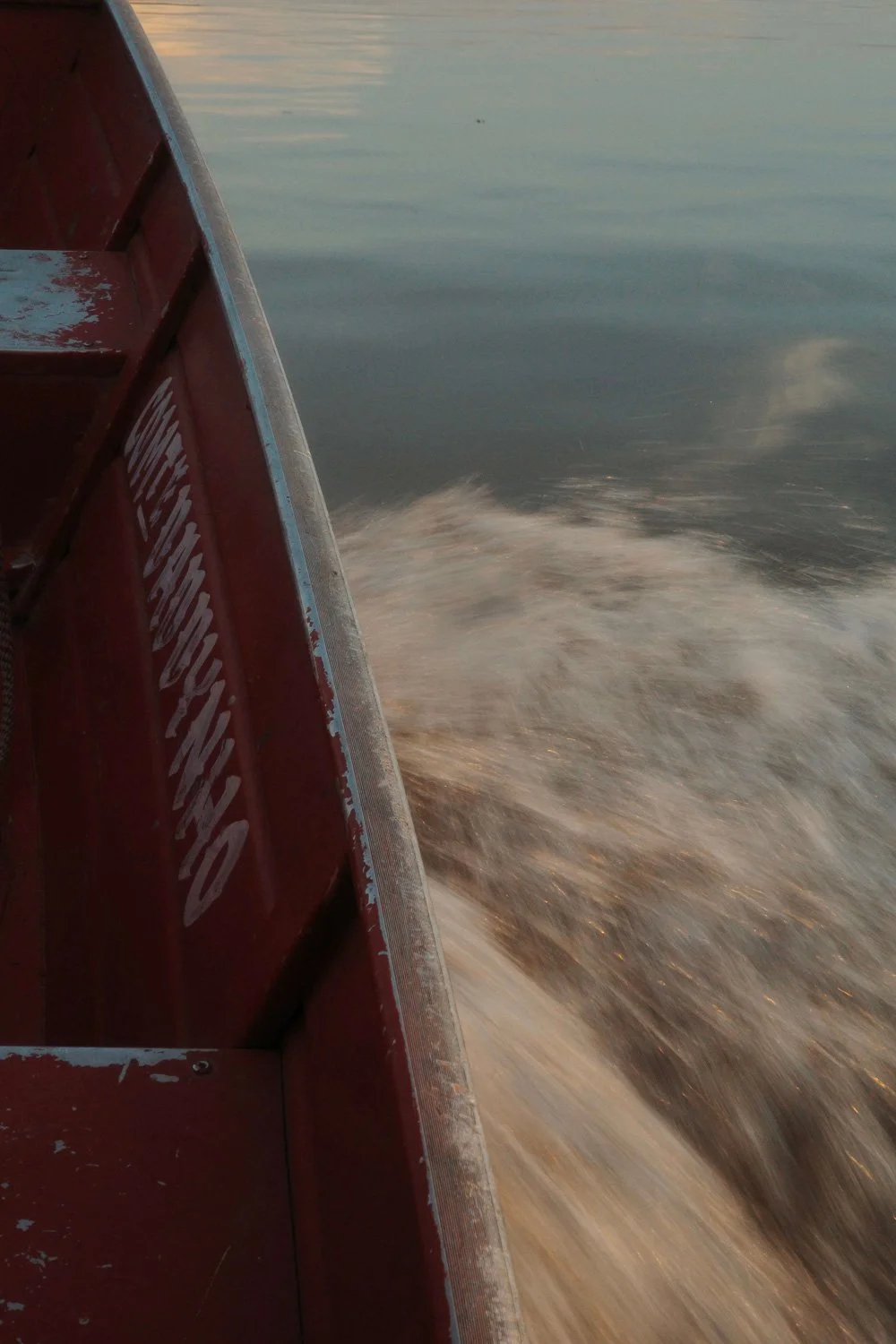
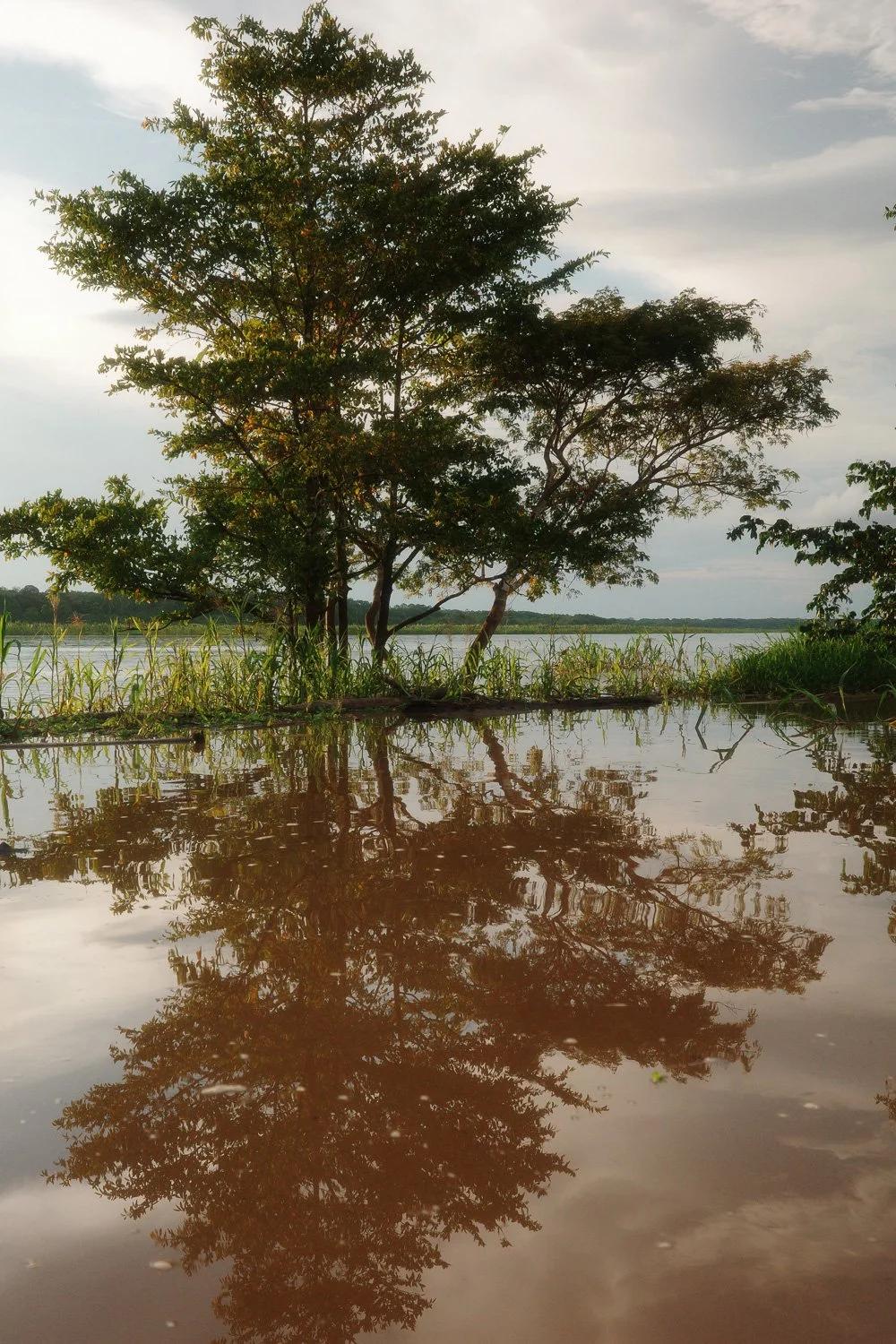
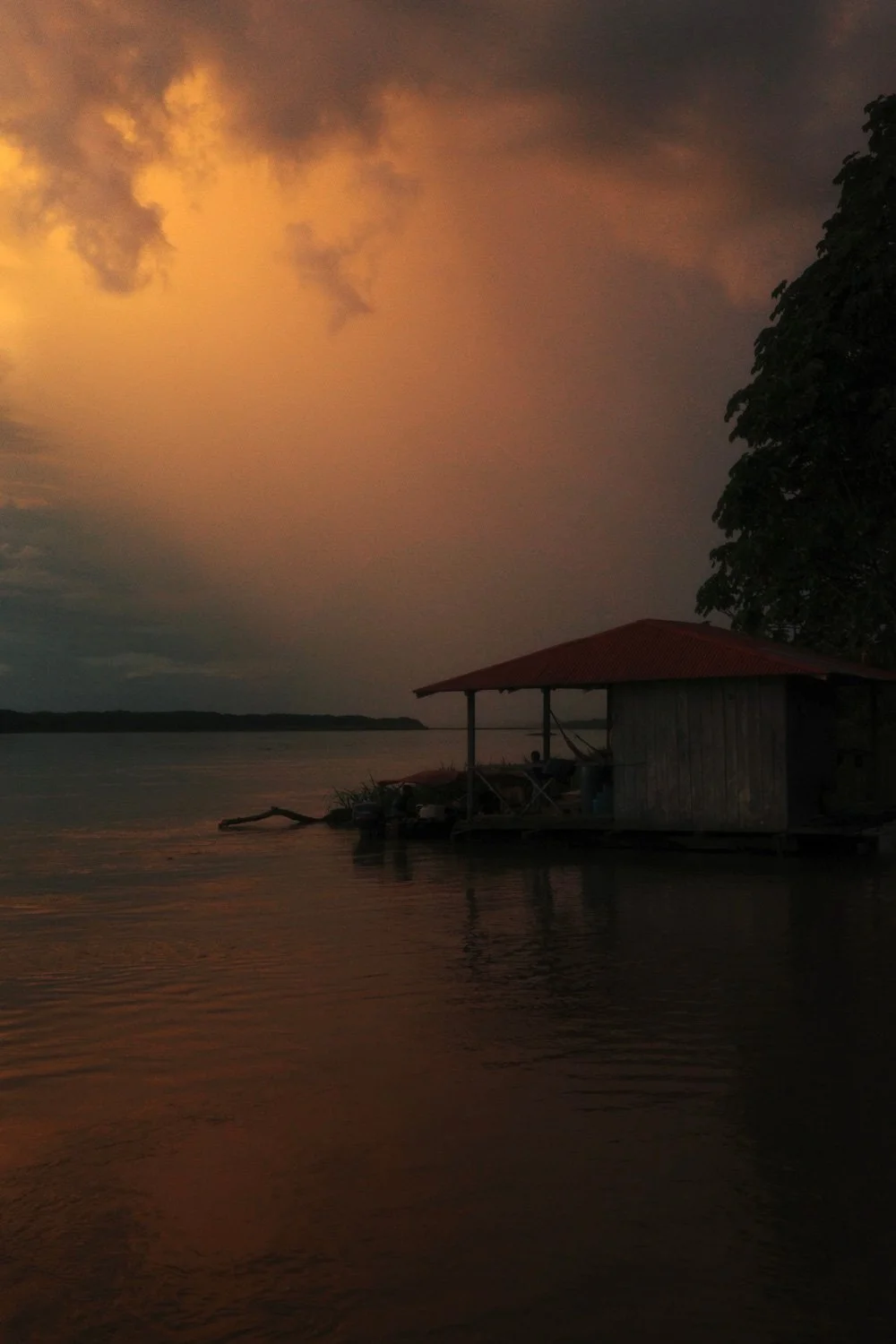
In the Colombian Amazon, the river is the only road. To reach the indigenous communities north of Leticia, you board a rápido, one of the narrow, packed speedboats that serve as the river’s buses. Wind and engine roar, a face full of river spray, and the pungent odor of diesel. But the second you step off the boat, the world goes completely still. The air is stifling, humid and heavy. There are no cars or roads here. Over the course of four days, our work took us to communities on the Colombian and Peruvian sides of the river.
I almost didn’t go
When Gray Muzzle Society began planning this trip, I was equal parts thrilled and nervous. The remoteness, the potential health risks, and feeling completely out of my depth—let’s be honest, the Amazon is a far cry from sunset portraits in the Rockies, all rattled around my brain when weighing whether to join a trip like this.
“Feel the fear and do it anyway” became my mantra. Afraid to say yes, but terrified to let it pass me by.
So I jumped. No regrets. It was beautiful. It was one of the most impactful trips of my life.
Why the work matters here
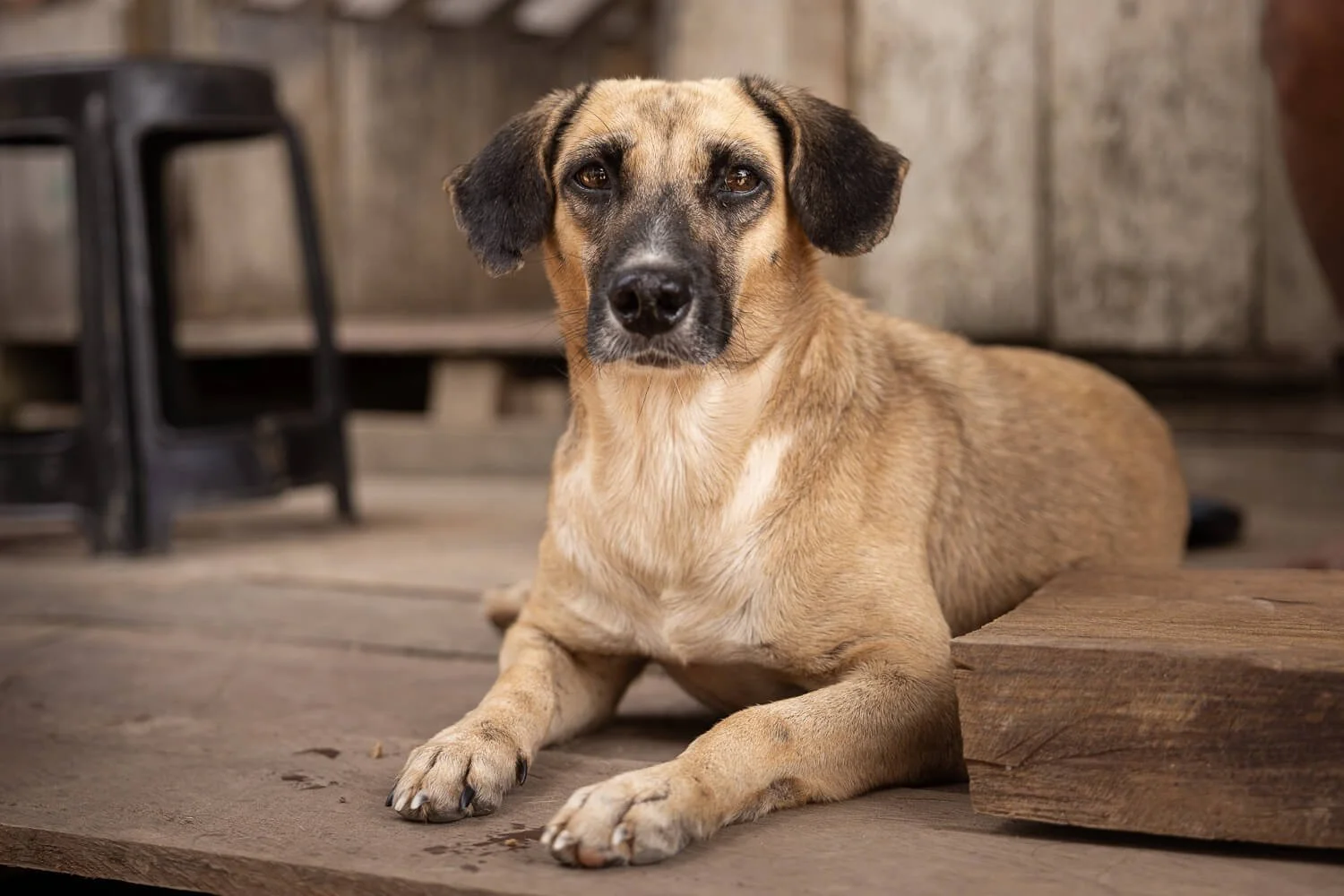
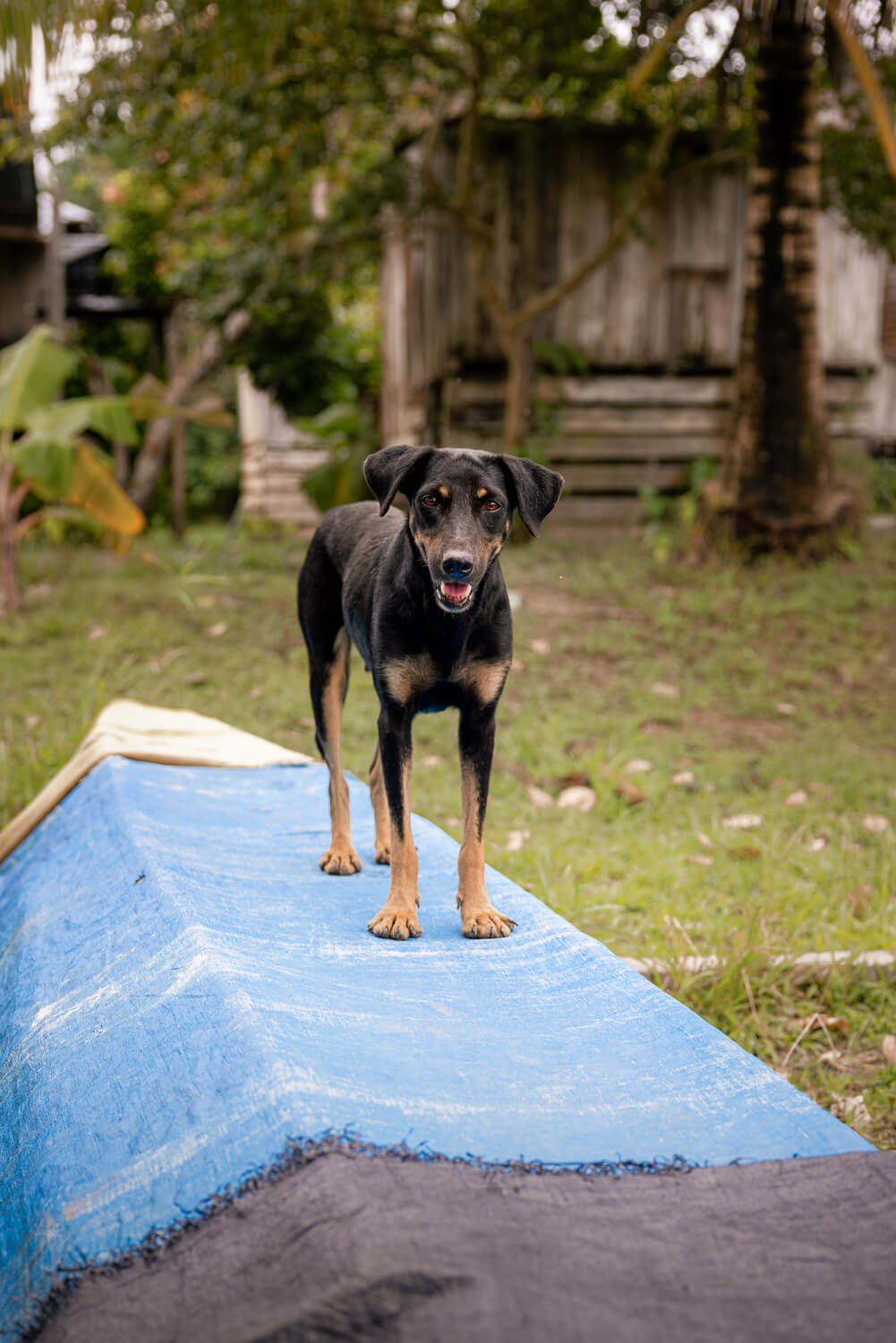
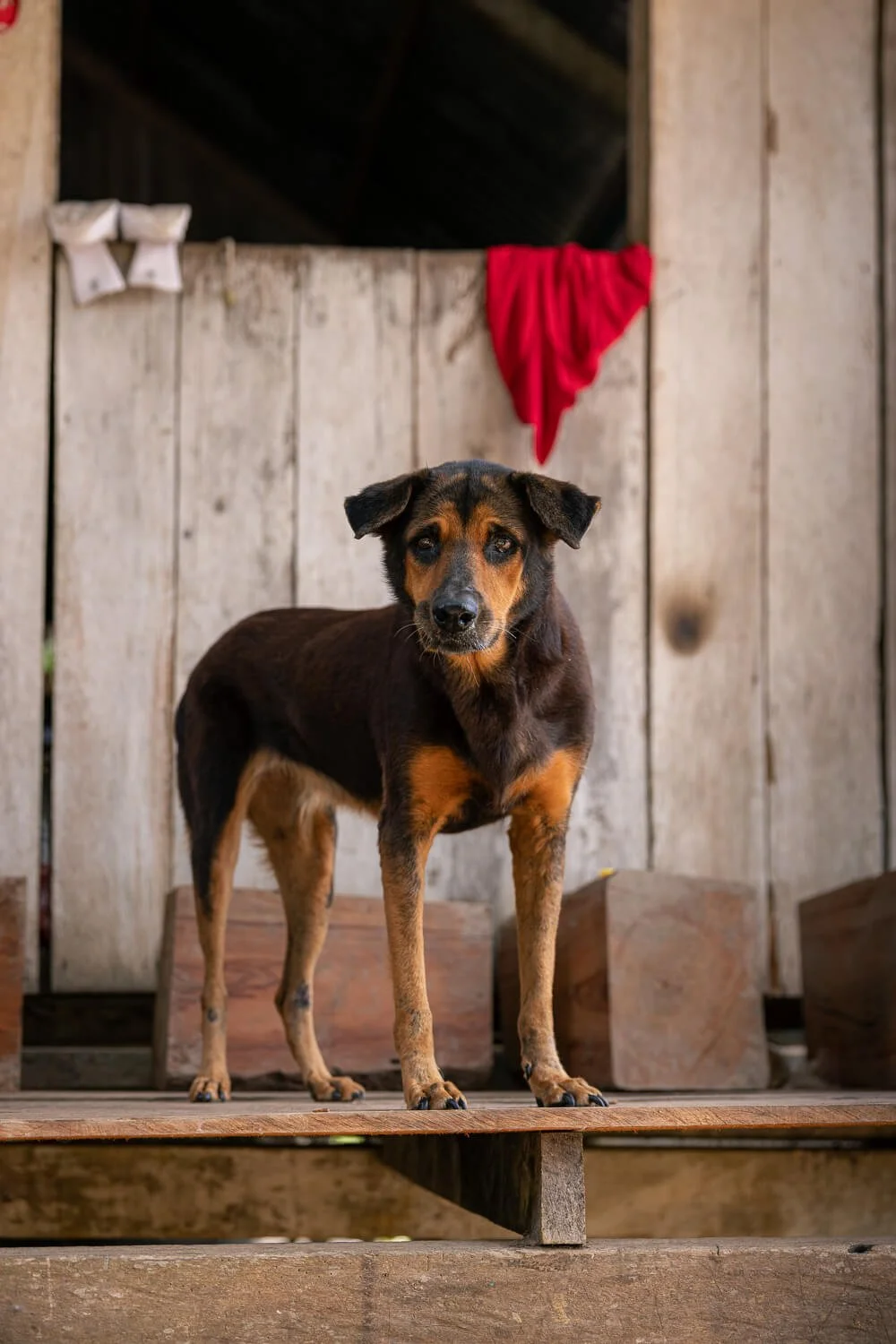
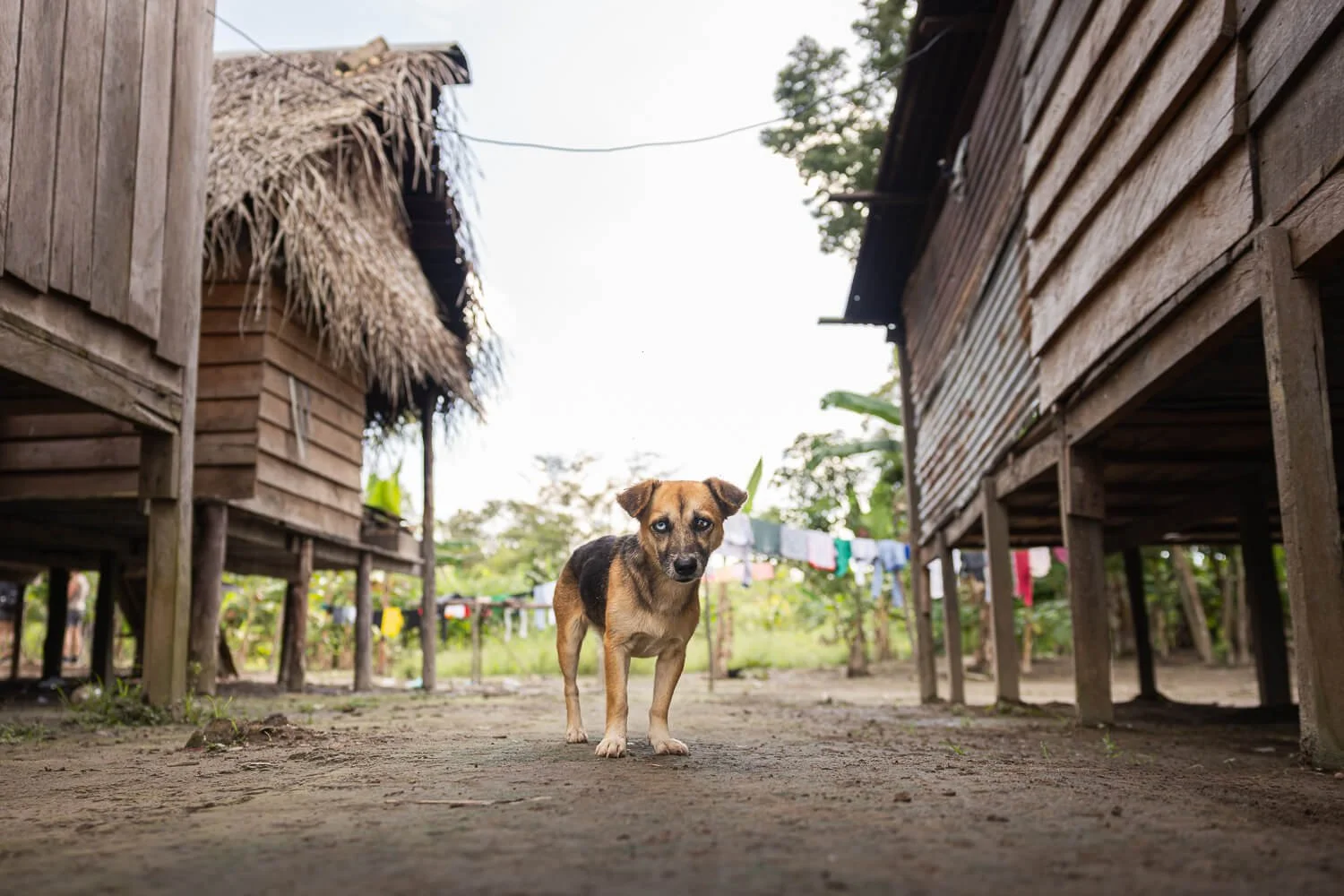
In the Amazon, dogs are free-ranging security alarms, hunting partners and vital threads in the social fabric. Some are well-cared-for pets and some roam the streets belonging to the whole community. Because they live in such close contact with their people, and are so far from a vet clinic, caring for them at home is an integral part of supporting public health.
Make no mistake, these dogs and cats are loved. As word spread throughout the communities, people would seek us out and invite us to come to their homes to care for their dogs.
One family had a dog who was reactive and clearly adored. Before we could get too close, they waved us back, and a young girl wrapped her arms around his neck, lines of determination etched on her face. They had already had him vaccinated for rabies and wanted to know if he would need a second shot. As someone who lives with a reactive dog, I recognized that dance immediately: the constant vigilance, the careful management, all of it underpinned by love.
A photojournalistic approach
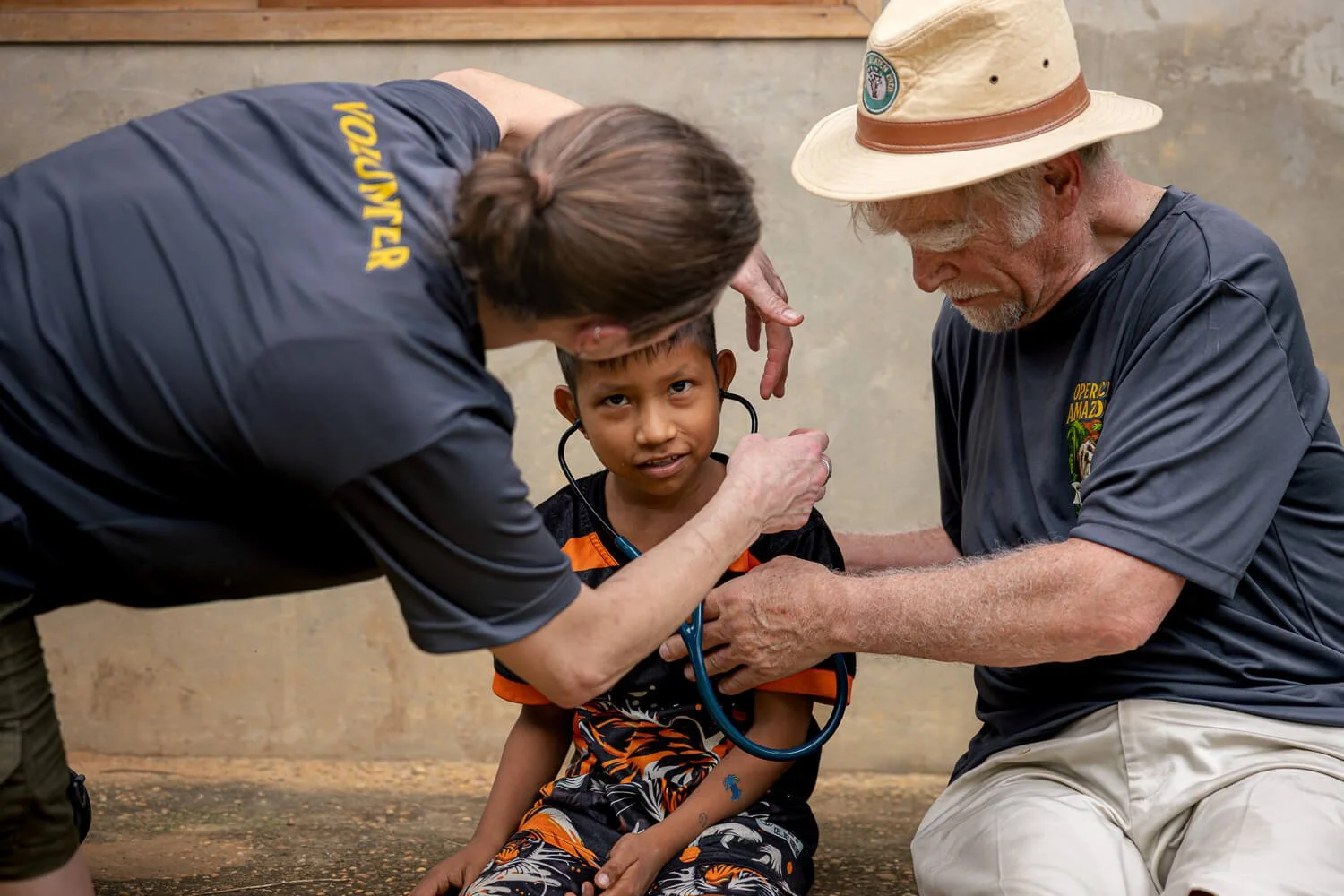
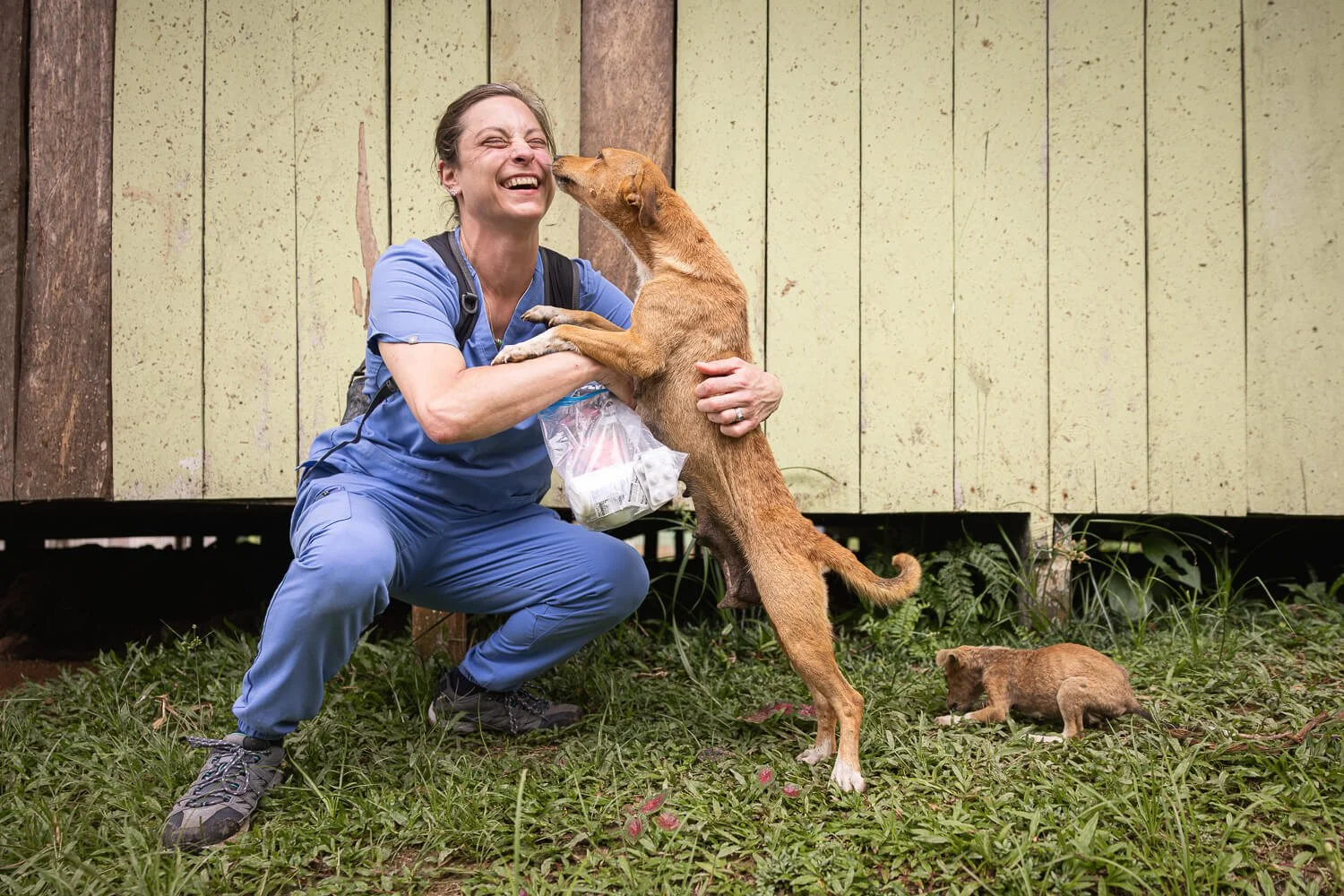
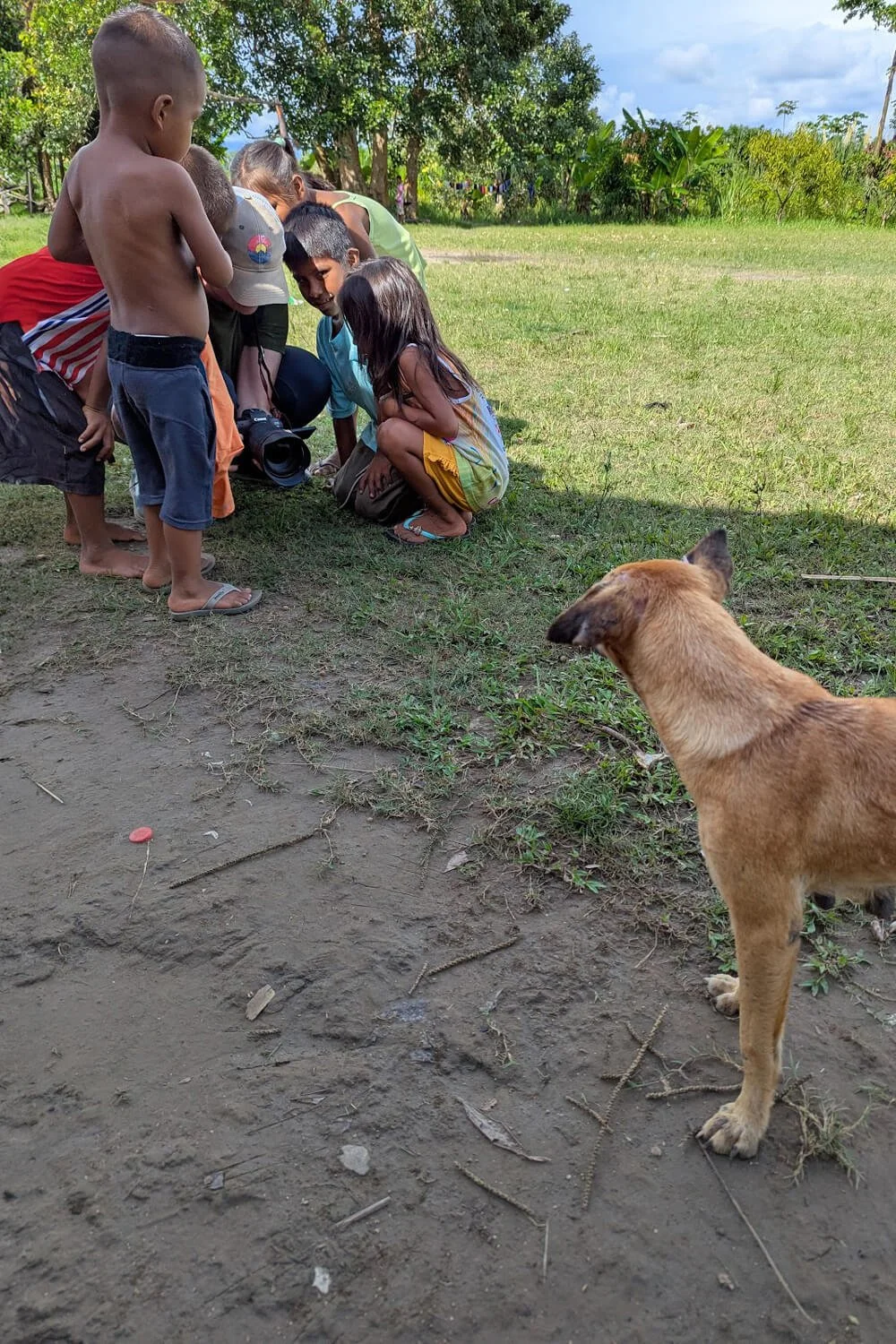
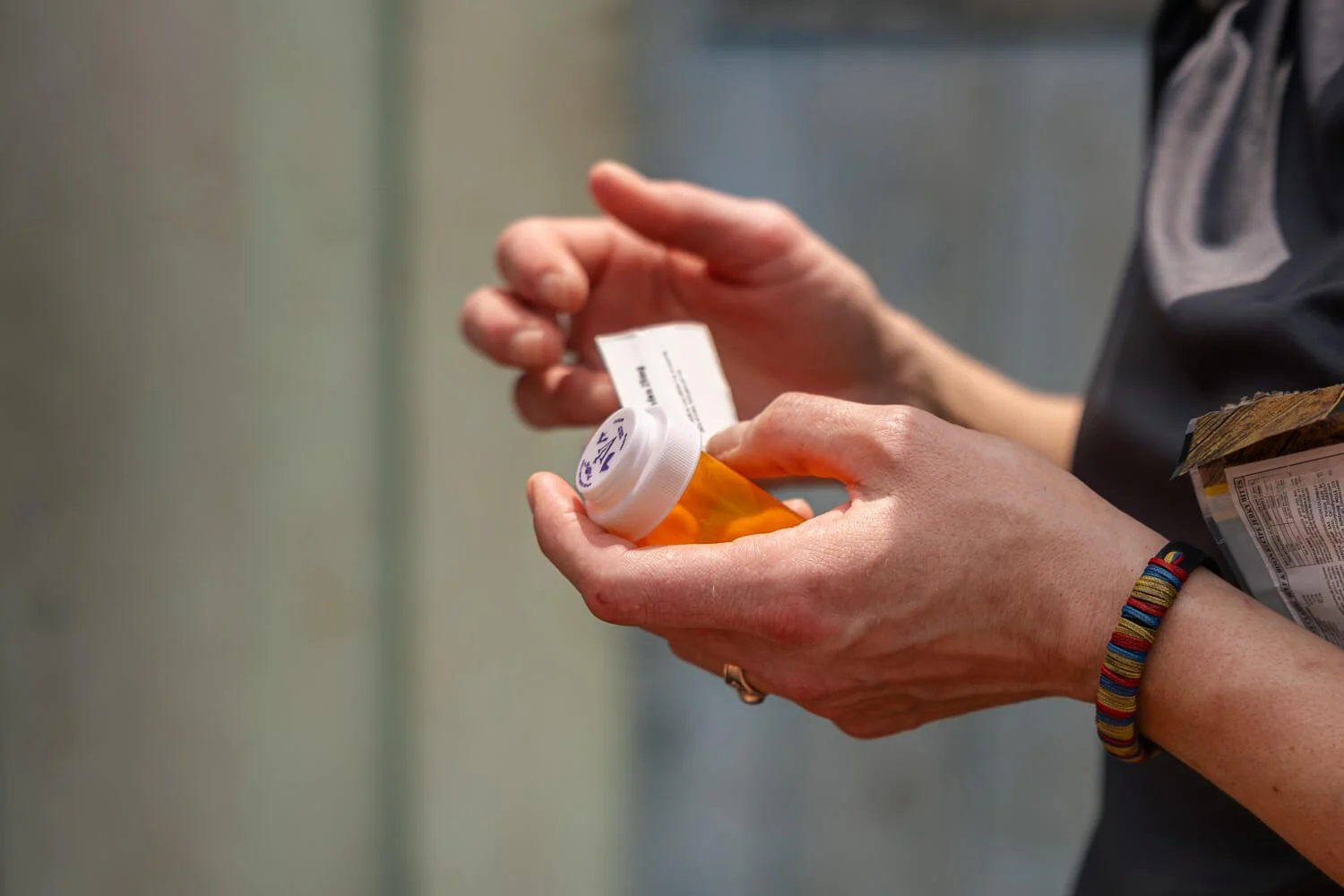
This work pushed me out of my comfort zone. It was entirely photojournalistic: I didn’t want to get in the medical team’s way, so I didn’t intervene. I was there solely to document what we encountered.
We worked in the middle of the day, in strong, harsh, equatorial light. I traveled with only one camera body and a 24-70 mm lens. I stuffed my camera bag full of moisture-wicking desiccant packets to keep the humidity out of my gear but there was no keeping it off of me.
It was so incredibly hot. Sweat running in rivulets, hair plastered to my neck, my hands so slick I nearly dropped my camera. For the first time on the trip, I questioned whether I was physically capable of doing my job.
The kids, at least, didn’t seem to mind the heat. They grabbed my hand, calling out “¡Mira!” (look!) and helped me find dogs to photograph. Their enthusiasm and curiosity about my camera and the work we were doing carried me through.
Blade
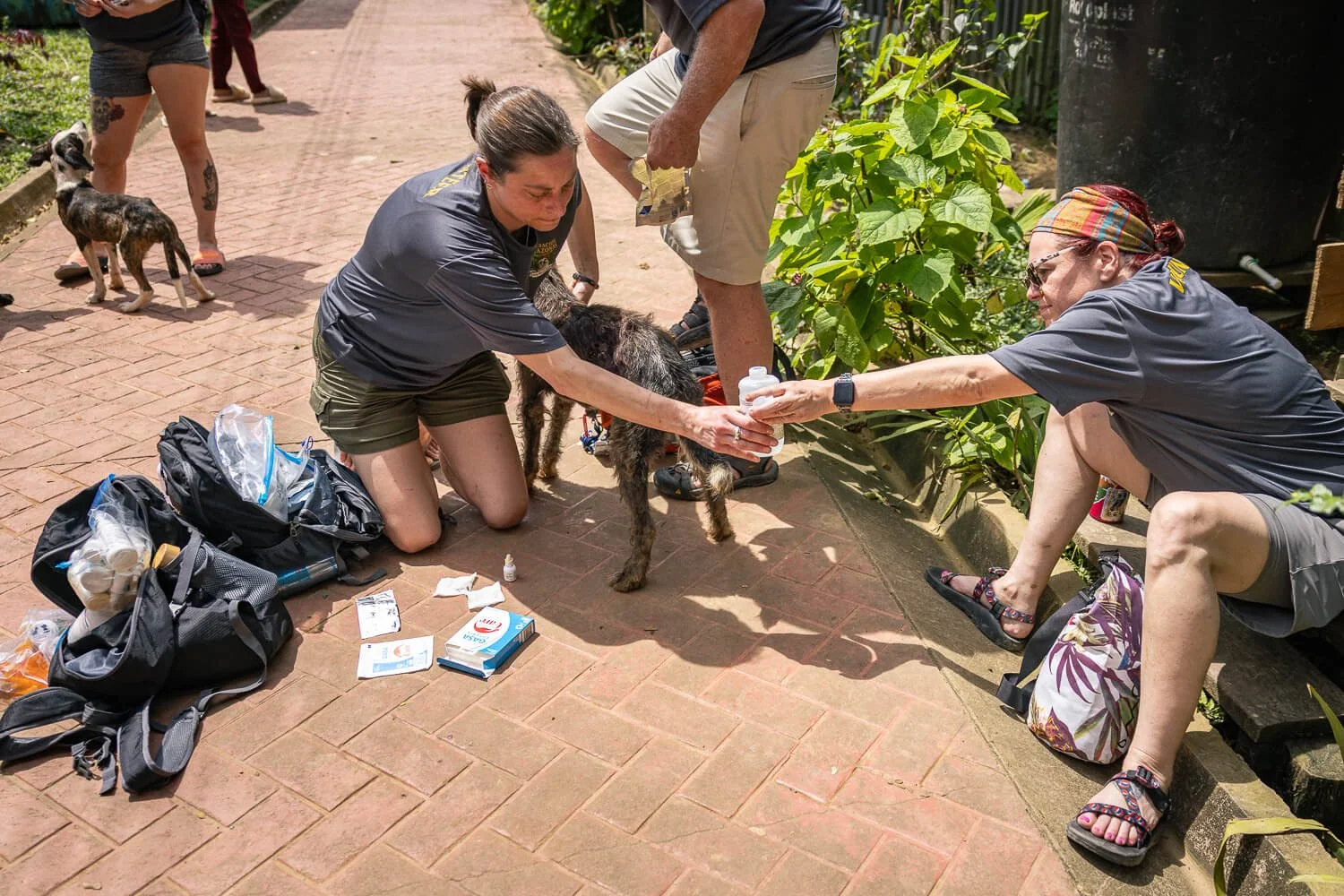
There’s one dog I still think about. Blade.
While we were in Macedonia, a Ticuna community of about 1,300 people, he found us. The flesh over his left eye had been torn away, leaving his eye exposed. Our veterinary team cleaned the wound and cut away the dead skin as best they could.
It was incredibly hard to witness, but what made it bearable (and I still have hope that he made it) was seeing, again and again, how much the community cared for their animals.
A pack of paws and people
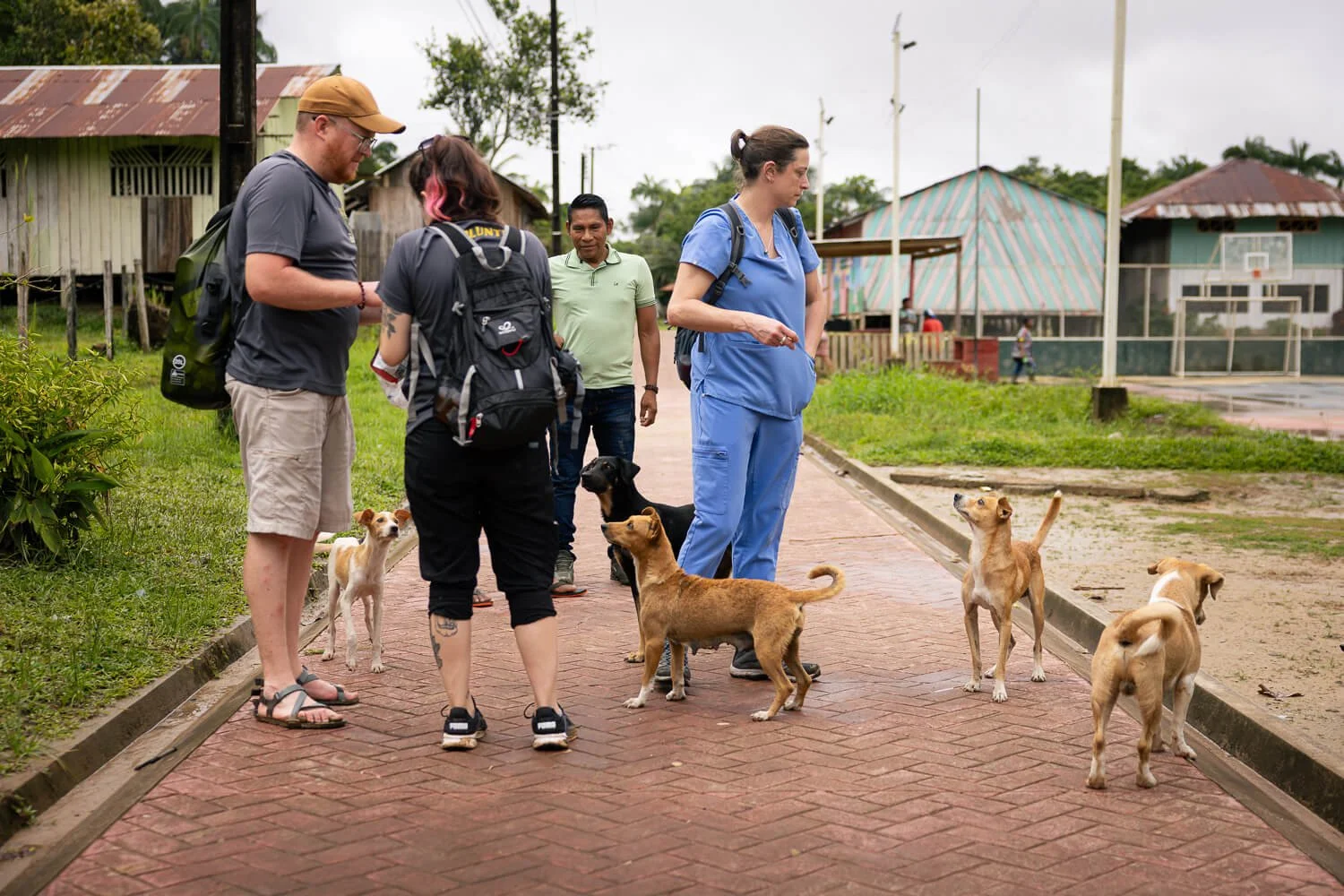
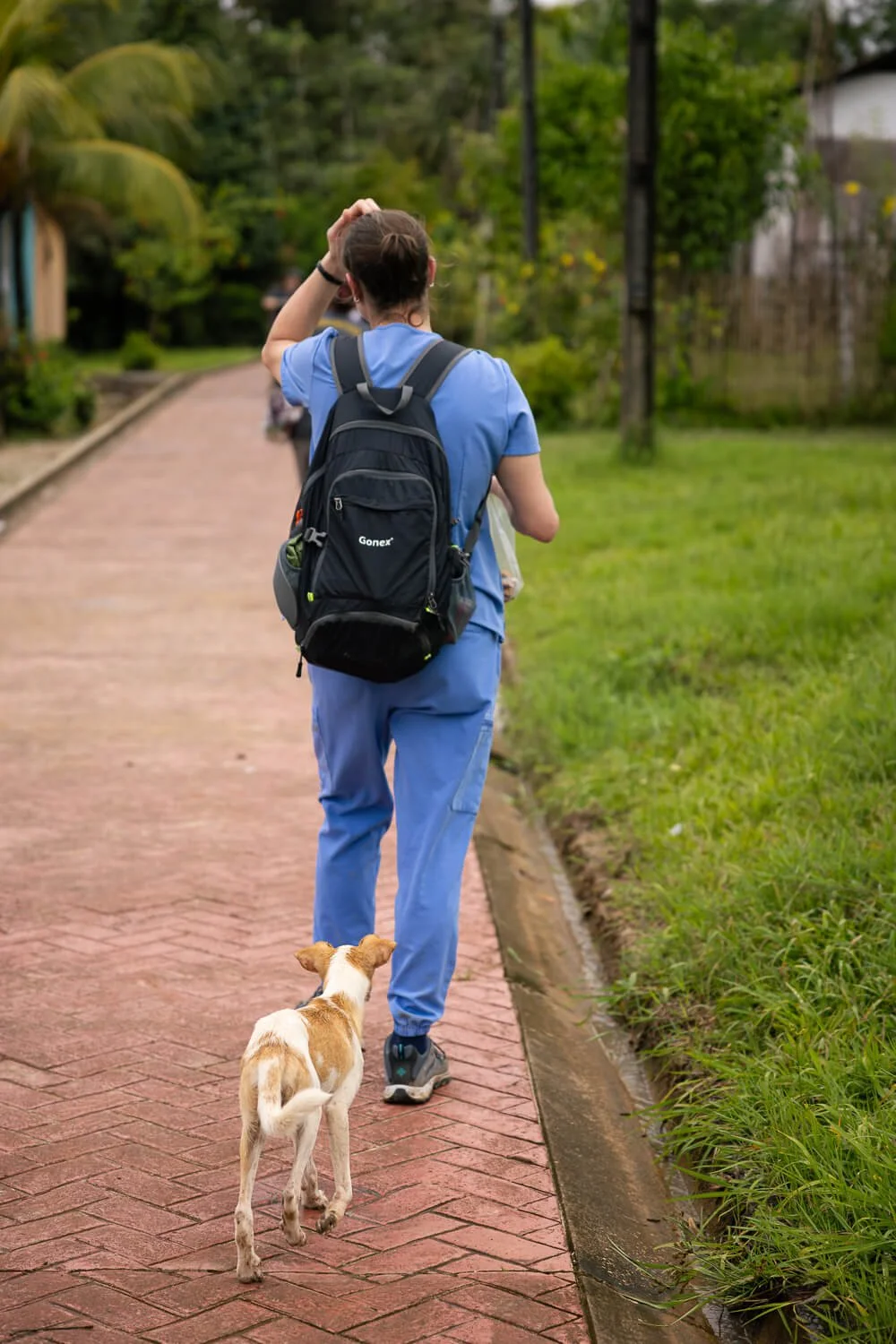
One of the brightest memories I carry with me from this work was witnessing the shift in trust. When we would first arrive in a village, the dogs and cats were cautious and shy, watching us from the safety of the shadows under the stilt houses. But as we worked, the energy would transform. The dogs we’d helped earlier began to follow us. And one by one, they trotted eagerly behind us, a Pied Piper procession of flopping ears and wagging tails moving down the main thoroughfare.
What I took with me
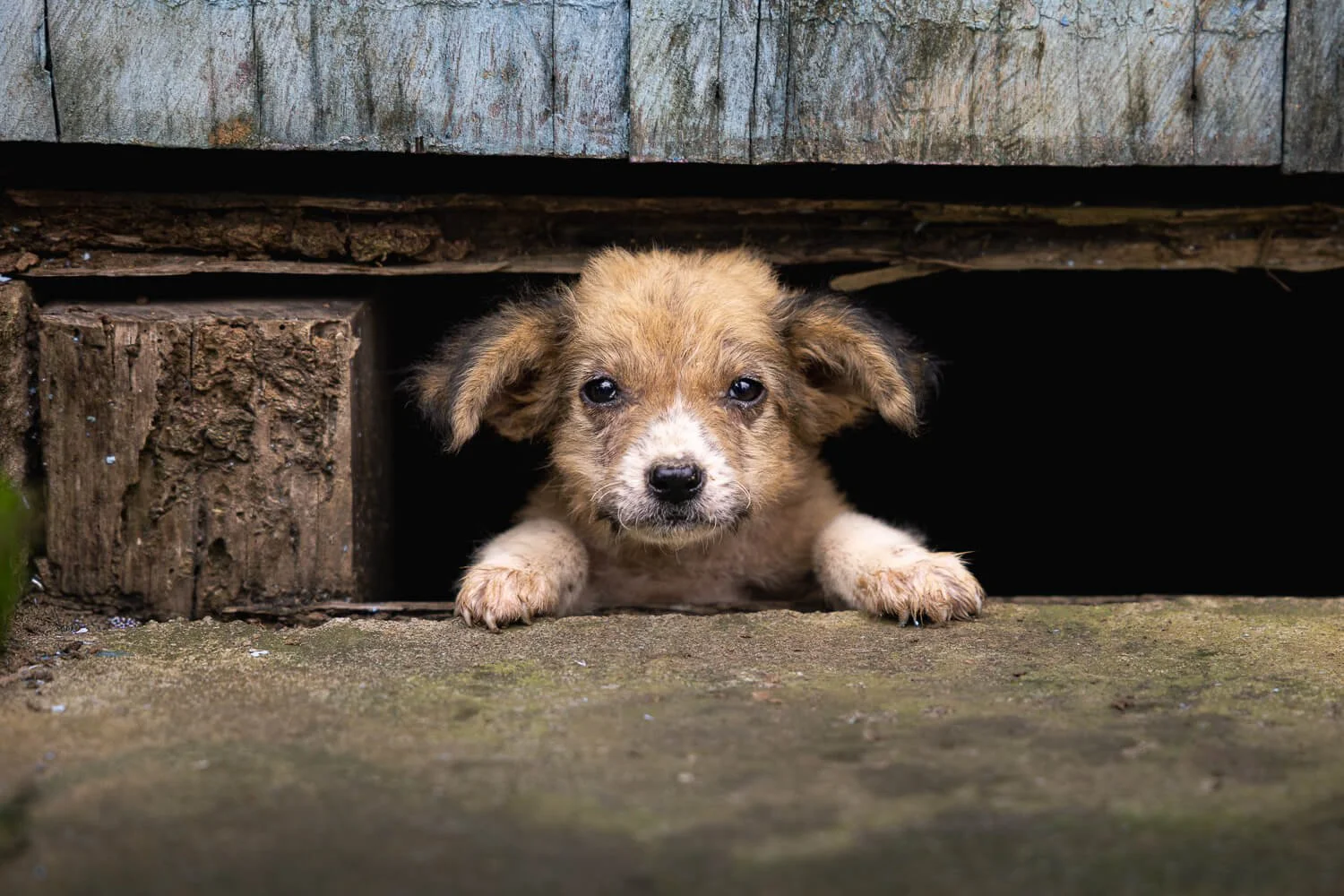
Documenting this project meant being challenged by every element: the humidity, the remoteness, the logistics and the language barrier.
The experience changed how I work. I don’t need the perfect weather or the perfect light to make something beautiful. I know I can make it work. I can do hard things. And the thought I hold onto tightest is that no matter where you are in the world, the bond shared between humans and their incredible companions is universal and unwavering.
Gray Muzzle Society’s work continues, both in the Amazon and here in Colorado. If this story moved you, you can support Operation Amazonas here.